A former colleague reached out to me recently. Early in her career, she worked for me as a content marketing manager. Today, she’s at a company called Lasso, an events-based business, and they were getting ready for their all-hands kickoff. (Give them a look if you’re in-market!)
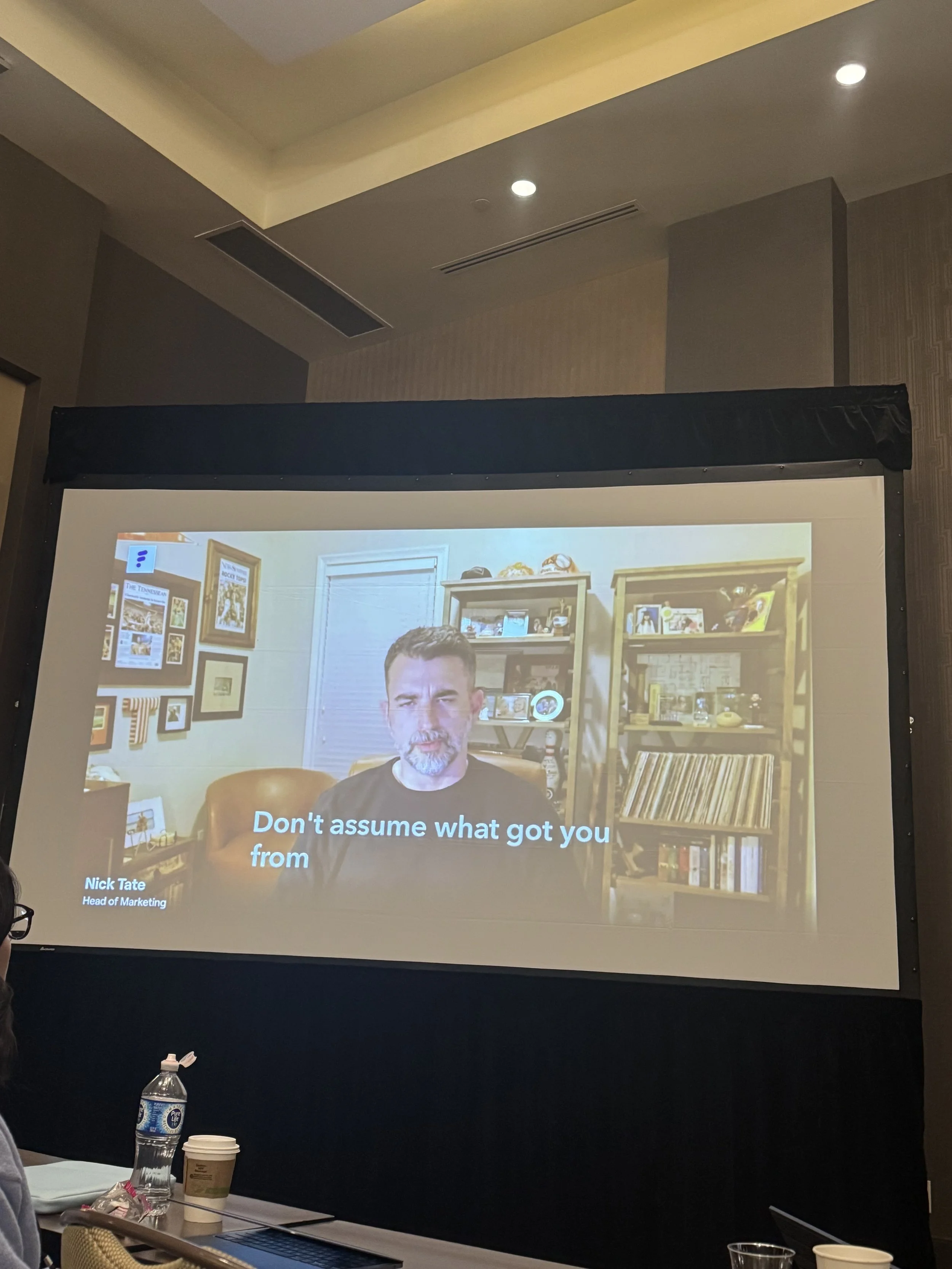
A screenshot from the meeting, sent as evidence this actually happened…
She asked if I’d be willing to answer a handful of questions about growth mindset and leadership for the team. I said yes without thinking too much about it. The questions themselves were straightforward. The kind that show up at the start of a year when a company is trying to set tone and direction.
I answered them pretty quickly. Not because they were easy, but because I didn’t feel the need to dress anything up. I’ve been in enough rooms and lived through enough cycles of growth to know that the language changes, but the underlying challenges usually don’t.
It wasn’t until later that it struck me how familiar my answers felt.
I hadn’t tried to summarize a philosophy or present a framework. I’d just spoken the way I tend to think when something actually matters. The responses were practical. A little blunt, maybe. Focused more on behavior than belief.
That’s usually a signal for me. When things get real, my thinking tends to get simpler.
The questions were framed around growth mindset, but what they really surfaced was how progress actually happens when there isn’t a clean playbook.
Growth rarely announces itself as an opportunity. More often it shows up as discomfort.
It shows up as a moment where the next step is obvious but inconvenient, or necessary but unpopular.
I’ve seen this play out across every phase of my career:
- Agency environments where speed was prized until quality slipped.
- Corporate roles where alignment mattered until decisions slowed to a crawl.
- Startups where ambition outpaced clarity and someone had to move anyway.
In those moments, you don’t get to wait for perfect information. You decide how you’re going to act, and you live with the consequences.
That same dynamic shows up at home, too. I see it with my kids all the time. The hard moments are rarely the big ones. They’re small and seemingly ordinary. Finishing something you don’t feel like finishing. Owning a mistake without being prompted. Practicing when there’s no audience. Choosing effort when no one is keeping score.
Those moments don’t look like growth while they’re happening. They just look like work. But over time, they compound. They shape judgment. They build confidence that doesn’t depend on praise or momentum.
That way of thinking didn’t come out of nowhere for me. Years ago in business and management classes, a simple idea stuck. The higher the responsibility, the fewer the total decisions, but the more weight each one carries. The only way to navigate that is to anchor yourself to principles that hold when conditions change.
When you don’t have that anchor, everything becomes reactive. You chase outcomes instead of making decisions. You optimize for comfort, consensus, or short-term relief. It feels safer in the moment, but it rarely leads where you want to go.
Leadership, I’ve learned, isn’t revealed in the big speeches or kickoff moments. It shows up in preparation. In follow-through. In how tension is handled when something breaks or expectations aren’t met. People don’t need to be told what matters. They figure it out by watching what’s repeated and what’s ignored.
That’s true in companies and in families. You can’t outsource the example.
Looking back at those questions now, I don’t think I gave them anything particularly novel. What I hope I gave them was something more durable. A reminder that growth isn’t a mindset you adopt. It’s a series of choices you make when the easy option is right there and you decide not to take it.
Those choices don’t always feel good. They don’t always get noticed. But they move you forward. And over time, they make it clear to the people around you how you expect to operate, not because you said it, but because you showed it.
That’s as true at work as it is at home. And it’s the lesson I keep coming back to, whether I’m answering questions for an all-hands, leading a team, or reminding my kids how progress actually happens when things don’t come easily.
Because eventually, they won’t.