If you really stop and think about it, this moment is strange.
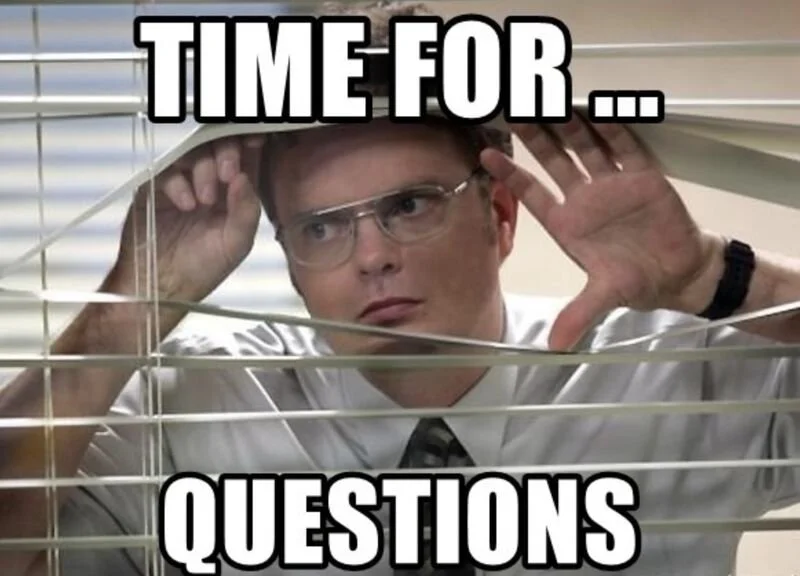
“Whenever I’m about to do something, I think, ‘Would an idiot do that?’ And if they would, I do not do that.”
For years, when we had a question, we asked the internet and accepted whatever answers surfaced through a fairly small set of businesses. We’d form opinions that lead to solutions from content derived from blogs, whitepapers, vendor comparisons, and analyst reports. Eventually, you landed on a point of view that conveniently led to someone’s product or sales motion. That was normal. We didn’t question it much.
Now we ask a brain.
Not a company (for argument’s sake, at least). Not a website optimized for conversion. Just something that can synthesize what’s out there and help us get oriented before we ever talk to a vendor. Sometimes it points us to a product. Sometimes it doesn’t. Either way, the buyer shows up informed in a very different way.
That single shift breaks more growth assumptions than most teams realize.
Layer in higher expectations, more competition, and the fact that AI dramatically lowers the barrier to building software in the first place, and you get what we’re seeing now. Familiar playbooks still sort of work, but they feel heavier. Less reliable. More expensive.
Growth takes more effort to produce the same outcome. It’s a change in how people decide.
Distribution Isn’t Just Harder. It’s Flatter.
A lot of teams talk about channels getting worse. That’s true, but it misses the bigger point.
What’s really happening is that the paths between curiosity and conversion are flattening.
- Search increasingly resolves questions without sending traffic anywhere.
- Social rewards individuals over brands.
- Paid acquisition competes against tools that solve parts of the problem instantly for almost nothing.
AI accelerates all of this.
It doesn’t just democratize the ability to build. It democratizes the experience of value. People can feel something useful happen almost immediately. No setup. No onboarding. No promise that it will pay off later. Once someone experiences that, their tolerance changes. For friction. For vague positioning. For being educated into a conclusion that already feels behind where they are.
That recalibration is happening quietly, buyer by buyer, and it’s reshaping go to market whether teams acknowledge it or not.
Persuasion Is Losing Leverage
Traditional marketing assumes you first earn attention, then earn trust.
Interrupt, explain, convince.
That sequence worked when information was scarce and discovery was controlled. It works less well when buyers can orient themselves before you show up. If someone already understands the problem, already has language for it, and already suspects what good looks like, then persuasion starts to feel unnecessary at best and manipulative at worst.
The role of marketing shifts from convincing to confirming.
What actually moves people now is confidence. Confidence that you understand the problem deeply. Confidence that you will keep solving it. Confidence that your incentives line up with theirs.
That confidence comes through people more than platforms. When founders, operators, and builders share how they think, what they are learning, and where they have changed their minds, it gives buyers a way to evaluate judgment. Not messaging. Judgment. That matters more than polish ever did.
The same dynamic plays out through partners, creators, and communities. Trust transfers when someone puts their reputation behind something they genuinely use and believe in.
Audiences are far more perceptive than we give them credit for.
The Product Carries the Brand Now
There’s another implication here that makes a lot of teams uncomfortable.
When people can experience value quickly, the product stops being something you explain and becomes something you prove. Every interaction teaches the user what to expect from you.
Does this feel thoughtful? Does it respect my time? Does it get better in ways that matter to me? Those questions get answered whether you intend to answer them or not.
This shows up most clearly in retention.
A huge number of software products were built around being faster or cheaper than the alternative. That held up when alternatives were manual, slow, on-premise dinosaurs. It holds up less when AI can often deliver something useful instantly.
When capabilities flatten, utility alone stops carrying the relationship. People stay because they believe the team will continue to deliver outcomes that matter as conditions change.
That belief is what trust actually looks like in practice.
Trust Comes From How You Operate
You don’t build that kind of trust through brand statements.
You build it by showing your work. By being clear about what you are building and why. By responding to real feedback and shipping in ways people can feel. By caring about the details that make a product easier, calmer, or more intuitive to use. By communicating in ways that add value instead of noise. By aligning how you get paid with whether customers actually succeed.
None of that is abstract. Users notice all of it.
This is why brand no longer lives cleanly inside marketing. It’s an organizational outcome. Marketing can articulate the story, but the product and operating model have to make it believable. When they don’t, people sense the gap immediately.
Trust Is the Growth System Now
Acquisition and retention are no longer separate problems. They’re the same system playing out over time.
People discover products through people they trust. They stick with products that continue to earn that trust through consistent behavior. The companies that are pulling ahead don’t feel louder. They feel steadier. They ship often. They explain clearly. They let real people speak in their own voices. They move fast without waiting for everything to be perfect.
AI will continue to compress differentiation at the feature level. Distribution will continue to flatten. Attention will keep getting more expensive.
Trust compounds anyway.
The real risk isn’t missing the latest channel or underusing AI. It’s clinging to a growth model built for a world where persuasion mattered more than belief. That world has already changed.
The only open question is how quickly teams are willing to change with it.